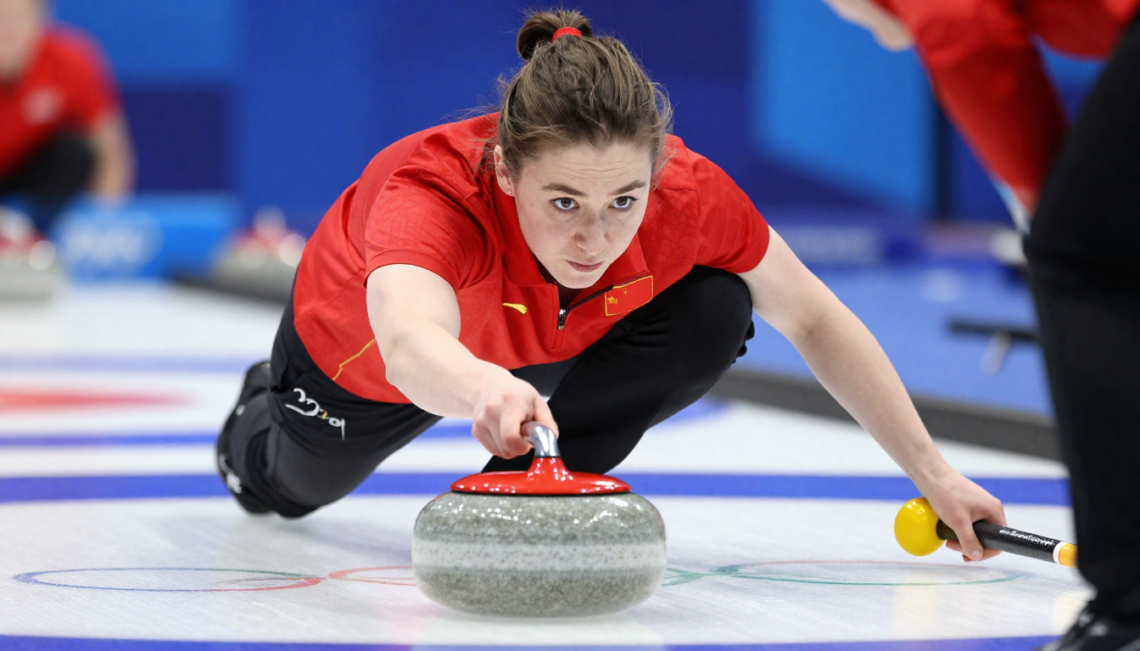
The 2026 Winter Olympics in Milano‑Cortina has been a showcase for thrilling Women Curling Results, with dramatic upsets and standout performances shaping the results. After several sessions of round‑robin play, the standings tell a compelling story of determination and evolving power dynamics in elite women’s curling.
Sweden’s women’s team, skipped by Anna Hasselborg, has maintained an unbeaten record through the early rounds, emerging as the top seed after decisive wins including a 10‑7 victory over Great Britain and a 6‑4 win against Switzerland.
The United States team has been one of the major talking points of the competition. After a dramatic historic first Olympic win against Canada with a 9‑8 result — the first time a U.S. women’s curling team has beaten Canada at the Olympics — the Americans have continued to be competitive.
However, the U.S. has also experienced setbacks, losing to previously winless Italy 7‑2, which snapped their winning streak and added unpredictability to the standings.
Meanwhile, Canada recovered momentum with key victories over China and Japan, improving their position in the standings and keeping their playoff hopes alive.
Additional results saw China rally past Italy in a tight 8‑7 match, showcasing a competitive battle that involved lead changes and tactical depth.
These outcomes illustrate how the Olympic women’s curling tournament has been defined by strategic battles, narrow victories, and historic breakthroughs.
World Championship and Major Tour Results in Women’s Curling
Beyond the Winter Olympics, recent World Women’s Curling Championship and major tour competitions have produced notable results that help frame the broader landscape of women’s curling results globally.
In the 2025 World Women’s Curling Championship — one of the sport’s most prestigious events before the Olympics — Canada successfully defended its title with a victory over Switzerland. Rachel Homan’s rink secured the gold with a final score that underscored their resilience and tactical excellence.
During the championship’s round‑robin play, Korea and Switzerland both maintained unbeaten records at various stages, highlighting the strength of multiple nations.
Switzerland continued a strong showing by remaining perfect later in the competition before the playoffs, often overcoming tight matches with strategic shotmaking.
These results serve as a backdrop to the 2026 curl season and explain why several teams arrived at the Winter Olympics with championship experience and confidence.
Domestic Championships and Curling Results from Regional Events
A full view of women’s curling results includes domestic and regional championships that feed into international competitions like the World Championship or Olympic qualifiers.
In Canada — a curling powerhouse — multiple provincial championships determine which teams represent their regions at the national level. In 2026, the PEI Women’s Curling Championship (won by Team Power) and the Ontario Women’s Curling Championship (won by Team Armstrong) helped shape who would compete at the Scotties Tournament of Hearts — Canada’s premier national women’s curling event.
The BC Women’s Curling Championship saw Team Reese‑Hansen emerge victorious, securing provincial representation and contributing to the depth of competitive curling talent in Canada.
These regional results often forecast future world and Olympic performances and are an essential part of capturing the full picture of women’s curling results throughout the season.
Historic Moments and Records from Recent Competitions
Several remarkable historical moments have influenced women’s curling results recently. One of the most significant occurred when the U.S. women’s team defeated Canada for the first time at an Olympic Games — a milestone that marked a shift in competitive confidence and tactical execution.
In the Grand Slam circuit — a series of elite events that attract the best curling teams worldwide every season — Rachel Homan captured her record‑extending 18th Grand Slam women’s title at the AMJ Masters, highlighting her team’s longevity and dominance at high levels of play.
These moments contribute not just to the raw results but to the evolving narrative of women’s curling as it grows in popularity, strategy, and international participation.
Emerging Patterns in Women’s Curling Results
From international championships to the Winter Olympics and domestic tournaments, several trends have emerged in recent women’s curling results.
First, Sweden and Canada consistently rank near the top, often delivering wins through tactical precision and strong shotmaking. Sweden’s unbeaten Olympic run exemplifies this consistency.
Second, teams that might historically have been underdogs — such as the United States and China — have delivered competitive results, indicating a broadening landscape of talent and competition. The U.S. Olympic victory over Canada and China’s narrow 8‑7 win over Italy are examples.
Third, tight matches and narrow margins — including several games decided by a single point — suggest that depth in women’s curling is increasing. Teams now routinely demonstrate the ability to compete at high levels through all ends of play.
The Importance of Round‑Robin Results
Round‑robin results in women’s curling events, especially at the Olympics and world championships, often set the stage for playoff positioning and medal contention. Each win or loss can dramatically shift a team’s path to semifinals and finals. At the 2026 Winter Olympics, performances in round‑robin sessions have already influenced which teams are favorites for podium positions and which face uphill climbs.
For many teams, early victories build confidence and tactical momentum; for others, recovery from an unexpected loss becomes a test of resilience and strategic adjustments.
Conclusion: What Women’s Curling Results Tell Us
Women’s curling results in 2026 reflect a sport rich in competitive depth, tactical ingenuity, and global engagement. The Milano‑Cortina Winter Olympics have produced dramatic moments and historic firsts, from Sweden’s unbeaten run to the United States’ breakthrough victory over Canada.
Meanwhile, world championship results and domestic championships provide the backbone of performance expectations, offering insight into long‑term trends and rising talent.
As the season continues, especially with the 2026 World Women’s Curling Championship on the horizon, fans and analysts alike will be watching closely to see which teams solidify their positions among the world’s elite.
The evolving results emphasize not only athletic skill but strategic depth, international rivalry, and the rising competitiveness that defines modern women’s curling.
(FAQs)
Q1: Which team is leading the women’s curling standings at the 2026 Winter Olympics?
Sweden’s women’s curling team has remained unbeaten through several rounds of play, placing them at the top of the standings so far.
Q2: Has the United States defeated Canada in Olympic women’s curling before 2026?
No — the United States recorded its first Olympic victory over Canada at the 2026 Games with a 9‑8 win.
Q3: Who won the 2025 World Women’s Curling Championship?
Canada successfully defended its World Championship title in 2025, defeating Switzerland in the final.
Q4: Are there new teams competing strongly in women’s curling results?
Yes — teams such as China have shown strong competitive results, including narrow wins at the Olympics, indicating a broader field of contenders.
Q5: When is the next major women’s curling championship after the Olympics?
The next major event is the 2026 World Women’s Curling Championship scheduled for March 14–22 in Calgary, Alberta, Canada.