In today’s fast-paced digital economy, businesses are constantly searching for smarter ways to scale, collaborate, and deliver results. One concept that has gained strong momentum is agency zoom—a modern approach that combines digital agility, strategic focus, and accelerated growth. Whether you are a startup, a growing brand, or an established enterprise, understanding agency zoom can help you unlock new opportunities and streamline your operations.
This article explores agency zoom in depth, breaking it down into clear sections to help you understand its meaning, benefits, use cases, and future potential.
What Is Agency Zoom?
Agency zoom refers to a growth-oriented agency model that emphasizes speed, flexibility, and digital collaboration. Unlike traditional agencies that often rely on rigid processes and long timelines, an agency zoom approach focuses on rapid execution, real-time communication, and scalable solutions.
The term also reflects how agencies “zoom in” on high-impact strategies while “zooming out” to maintain a big-picture perspective. This dual focus allows agencies to deliver targeted results without losing sight of long-term goals.
At its core, agency zoom is about working smarter, not harder, using technology, data, and streamlined workflows to achieve faster outcomes.
The Evolution of the Agency Zoom Model
The rise of remote work, cloud tools, and global collaboration has reshaped how agencies operate. Traditional agency structures struggled to keep up with these changes, leading to inefficiencies and delayed results. Agency zoom emerged as a response to these challenges.
Early digital agencies began adopting agile frameworks, virtual meetings, and real-time reporting. Over time, these practices evolved into a full agency zoom model, where speed, transparency, and adaptability became defining traits.
Today, agency zoom is not limited to digital marketing alone. It is applied across branding, development, consulting, media buying, and even creative production.
Core Principles Behind Agency Zoom
The success of agency zoom relies on a few foundational principles that guide decision-making and execution. These principles ensure consistency while allowing flexibility.
Speed is a major factor, but it does not mean rushing. Instead, it means reducing unnecessary steps and focusing on actions that deliver measurable impact. Transparency is another key principle, with clients having access to live dashboards, frequent updates, and open communication channels.
Collaboration also plays a central role. Agency zoom models often bring together cross-functional teams that work closely with clients, creating a partnership rather than a vendor relationship.
How Agency Zoom Improves Client Collaboration
One of the biggest advantages of agency zoom is improved collaboration between agencies and clients. Regular video meetings, shared project management tools, and real-time feedback loops make communication more efficient.
Clients are no longer left waiting weeks for updates or reports. Instead, they are involved throughout the process, which leads to better alignment and faster decision-making. This collaborative approach reduces misunderstandings and ensures that campaigns stay on track.
Agency zoom also allows agencies to adapt quickly based on client feedback, making changes in days rather than months.
The Role of Technology in Agency Zoom
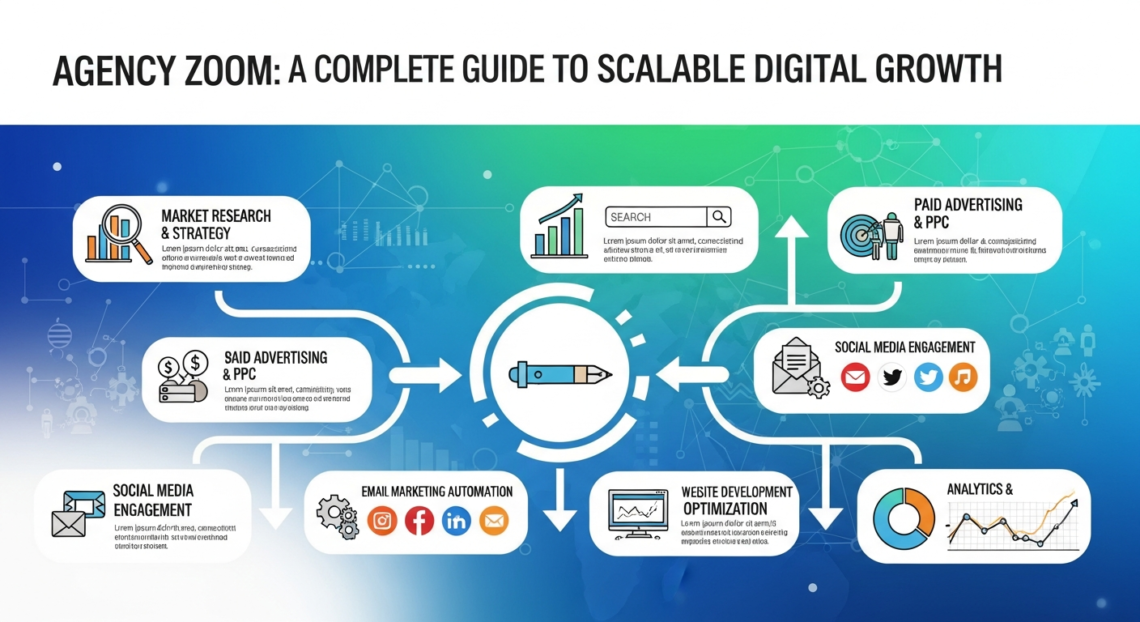
Technology is the backbone of any agency zoom strategy. Cloud-based platforms, automation tools, and data analytics enable agencies to operate at scale without sacrificing quality.
Video conferencing tools support virtual collaboration, while project management systems help teams track progress in real time. Automation reduces repetitive tasks, freeing up creative and strategic resources.
Advanced analytics tools also play a major role, allowing agencies to measure performance continuously and optimize campaigns based on real data rather than assumptions.
Agency Zoom for Marketing and Branding
In marketing and branding, agency zoom delivers faster go-to-market strategies and more agile campaign management. Instead of launching massive campaigns after months of preparation, agencies can test, learn, and optimize in short cycles.
This approach is particularly effective for digital advertising, social media, and content marketing. Brands can respond to trends, audience behavior, and performance data almost instantly.
Agency zoom also supports consistent brand messaging across channels by centralizing communication and creative workflows.
Benefits of Adopting an Agency Zoom Approach
Businesses that work with an agency zoom model often experience improved efficiency and better results. Faster turnaround times mean quicker wins, while continuous optimization leads to higher ROI.
Cost efficiency is another benefit. By eliminating unnecessary steps and focusing on high-impact activities, agencies can deliver more value without inflating budgets.
Additionally, agency zoom encourages innovation. Teams are empowered to experiment, test new ideas, and adapt without being constrained by rigid structures.
Challenges and Limitations of Agency Zoom
While agency zoom offers many advantages, it is not without challenges. The emphasis on speed requires strong project management and clear communication. Without proper structure, rapid execution can lead to confusion or burnout.
Another challenge is maintaining quality at scale. Agencies must ensure that fast delivery does not compromise creativity or strategic depth.
Finally, not all clients are ready for an agency zoom model. Some prefer traditional processes and may need time to adapt to a more collaborative and fast-paced approach.
Choosing the Right Agency Zoom Partner
Selecting the right agency zoom partner is critical to success. Businesses should look for agencies with proven experience, transparent workflows, and a strong technology stack.
Cultural fit is also important. An effective agency zoom relationship requires trust, open communication, and shared goals. Agencies that act as strategic partners rather than service providers tend to deliver better outcomes.
It is also essential to assess how the agency measures success and reports results, ensuring alignment with your business objectives.
The Future of Agency Zoom
The future of agency zoom looks promising as businesses continue to prioritize agility and digital transformation. Artificial intelligence, automation, and predictive analytics are expected to further enhance agency zoom capabilities.
As remote and hybrid work models become standard, agency zoom will likely evolve into the default agency structure rather than a niche approach. Agencies that embrace this model will be better positioned to meet changing client expectations.
Ultimately, agency zoom represents a shift toward smarter, faster, and more collaborative ways of working in the digital age.
Final Thoughts on Agency Zoom
Agency zoom is more than just a trend; it is a reflection of how modern businesses operate and grow. By combining speed, technology, and collaboration, this model enables agencies and clients to achieve meaningful results in less time.
For businesses looking to stay competitive, understanding and embracing agency zoom can be a powerful step toward sustainable growth. As the digital landscape continues to evolve, agency zoom offers a flexible and future-ready framework for success.